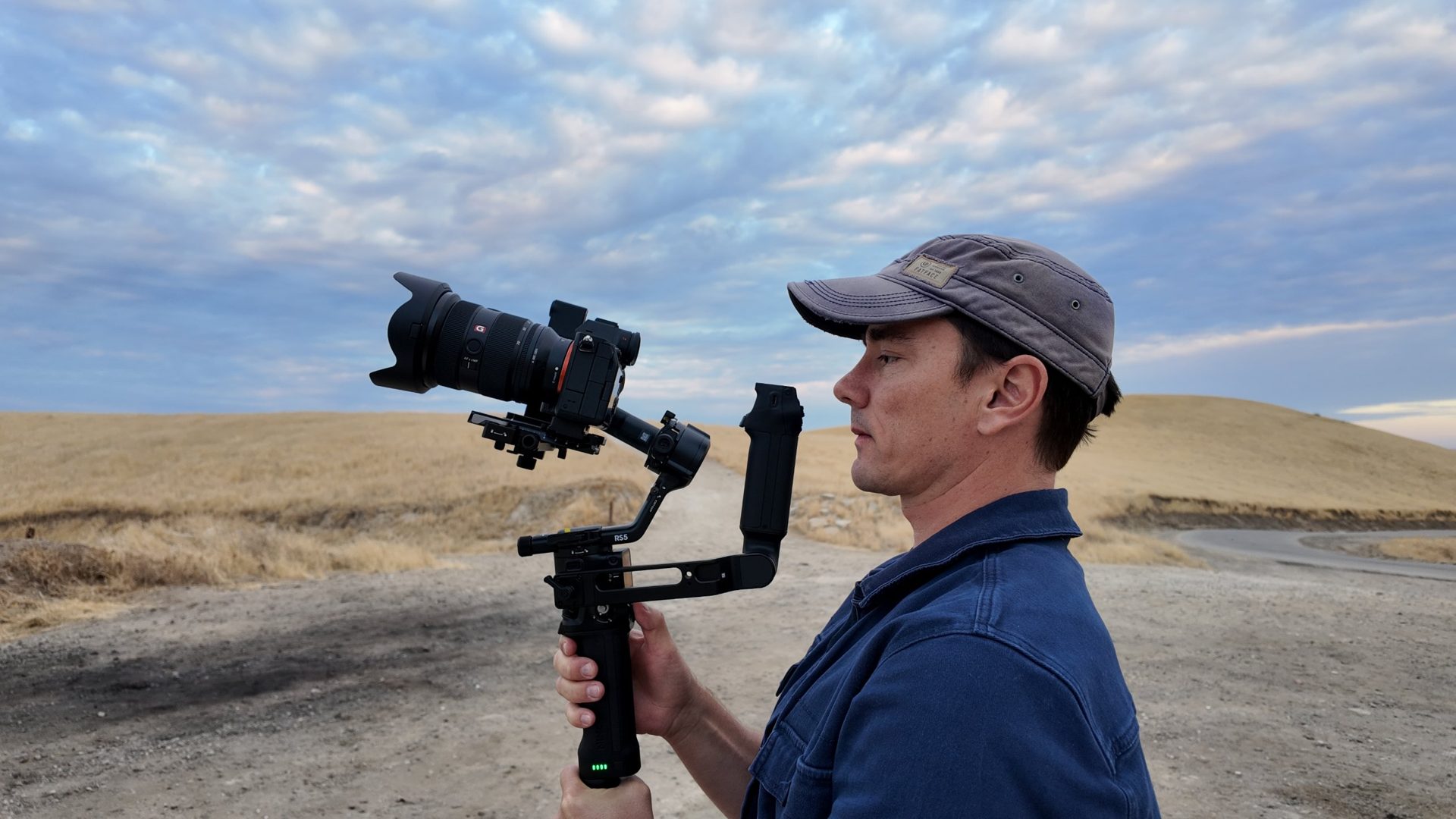
I have been shooting with the DJI RS 5 Combo for six months now, paired with my Sony A7 IV and my go-to lens, the Sony FE 24-70mm f/2.8 GM II. It has come with me on client shoots ranging from sit-down interviews to a dusty desert location in California. This is not a lab test. It is what I have learned from carrying it around, setting it up in a hurry and relying on it when a client is watching.
The short version: it has made my footage noticeably more cinematic, and the tracking module has turned me into a far better tracking-shot operator than I have any right to be. It asks for patience with the settings, and there is one annoying niggle with the camera plate, but I would not go back.
The quick stats
| Price | £619 |
|---|---|
| In the Combo | Gimbal, RS Enhanced Intelligent Tracking Module, Electronic Briefcase Handle, quick-open tripod, carrying case, battery grip, quick-release plates, cables |
| Weight | 1.46kg |
| Payload | Up to 3kg |
| Battery | Around 14 hours (DJI's standby figure) |
| Charging | About one hour |
| Other features | Automated axis locks, fine-tuning balance knobs, Bluetooth shutter control for Sony and other brands |
Why I chose the Combo
I wanted the briefcase handle, the tripod and the case, but the real reason was the tracking module. More on that below, because it turned out to be the best decision I made.
Before the RS 5
I had been using an RS 3. It was okay, but it never really became part of how I worked, and on important shoots I would often fall back on a tripod just to be safe. The difference now is simple: my footage is much more cinematic, and I actually reach for the gimbal instead of avoiding it.
The real test: a desert shoot in California
The RS 5 had its biggest test on a recent climate tech shoot in the California desert: heat, dust and long days.
It did not let me down once. The battery lasted for ages, and I never ran out. When I got home I gave it a proper clean and checked the joints and connections, and there was surprisingly little dust in there.
Setting up in the field still needs a flat surface to balance on, but it is much, much easier than with other gimbals, thanks to the fine-tuning knobs. You nudge each axis into place rather than wrestling the arms about.
The shot I am proudest of
The most important shot of that shoot was an extreme close-up of water flowing out of a machine that makes drinking water from thin air, with the desert behind it. The whole film depended on proving the technology works, so it had to be rock steady and perfectly framed.
I tapped on the pipe in the tracking module, held the rig in close using the briefcase handle, and the gimbal kept it locked on. Honestly, I could not have got that shot without it. The client was extremely happy with how smooth the footage was, especially the close-ups.
What I love
The tracking module is a game changer
You select a person or object on the module's screen, move, and the camera follows them. I am not a natural tracking-shot operator, and this has taken my tracking shots to the next level.
One thing to know: the module sits higher up than the camera, so what it sees is not exactly the frame the camera is capturing. In practice that has not been a problem, but it is worth bearing in mind for very tight framing.
Close-ups are rock steady
The gimbal is brilliant for keeping close-ups steady, which is where handheld footage usually gives itself away.
The briefcase handle
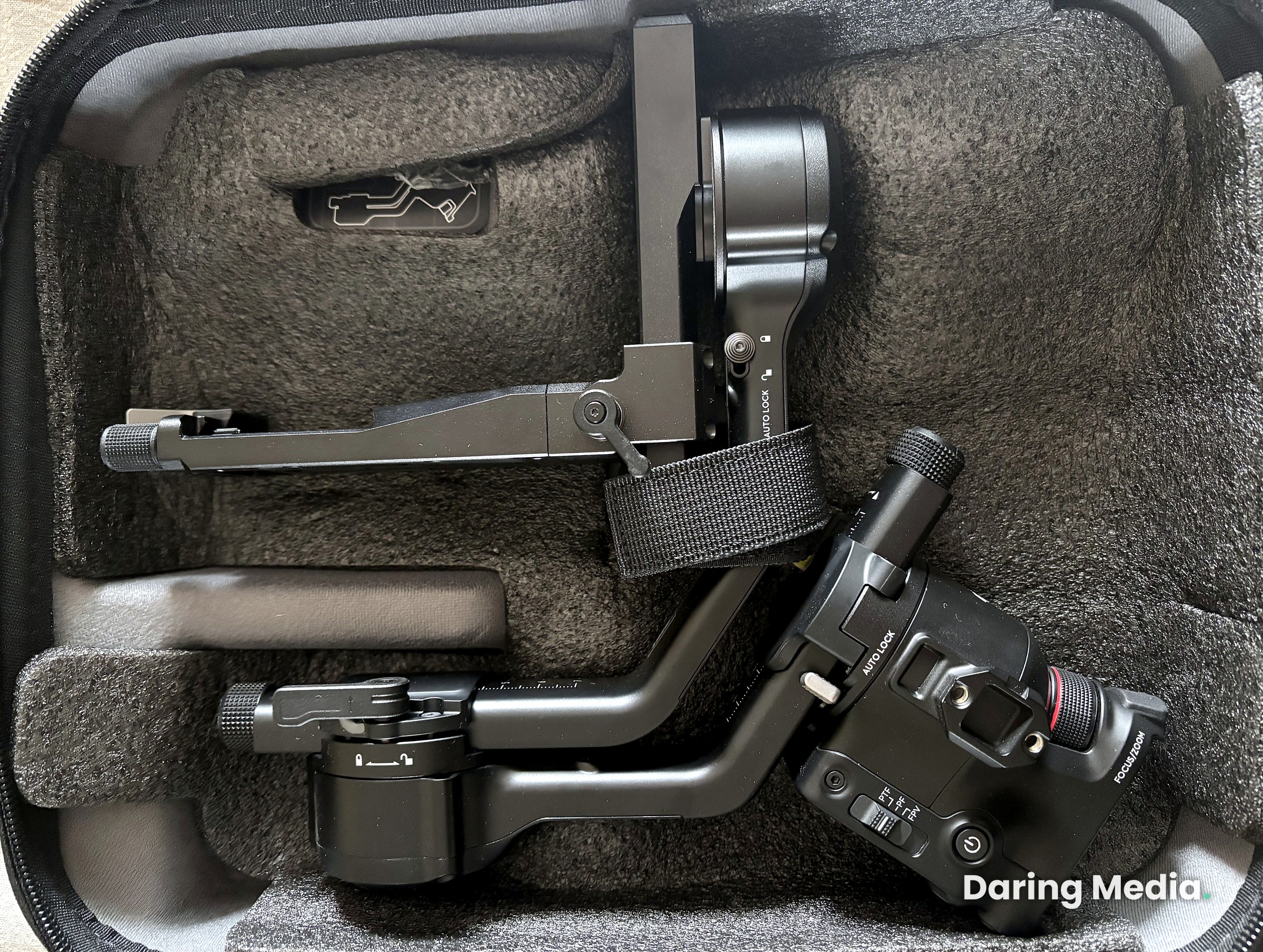
I love it. It lets you hold the rig in close, makes low angles comfortable and gives you a second way to hold it on a long day.
It looks the part
The RS 5 looks slick and professional, and clients notice when it comes out of the case. It signals that their story is being taken seriously.
It folds itself away
Turn it off and it folds the camera in and locks. A small thing that makes moving between locations so much easier.
It forgives small lens changes
I often adjust the zoom slightly mid-shoot, and it copes without needing a full rebalance.
It is tough
Heat and desert dust did not bother it at all.
What I do not love
The settings take time to learn
The physical setup is easy, but the settings can trip you up. More than once I have pressed the joystick to move the camera and it has started zooming instead, because a setting had been changed by mistake. I am still getting my head round the different modes, including FPV. You can adjust how smooth and responsive it is, and I have not explored that much yet, so there is more to get out of it.
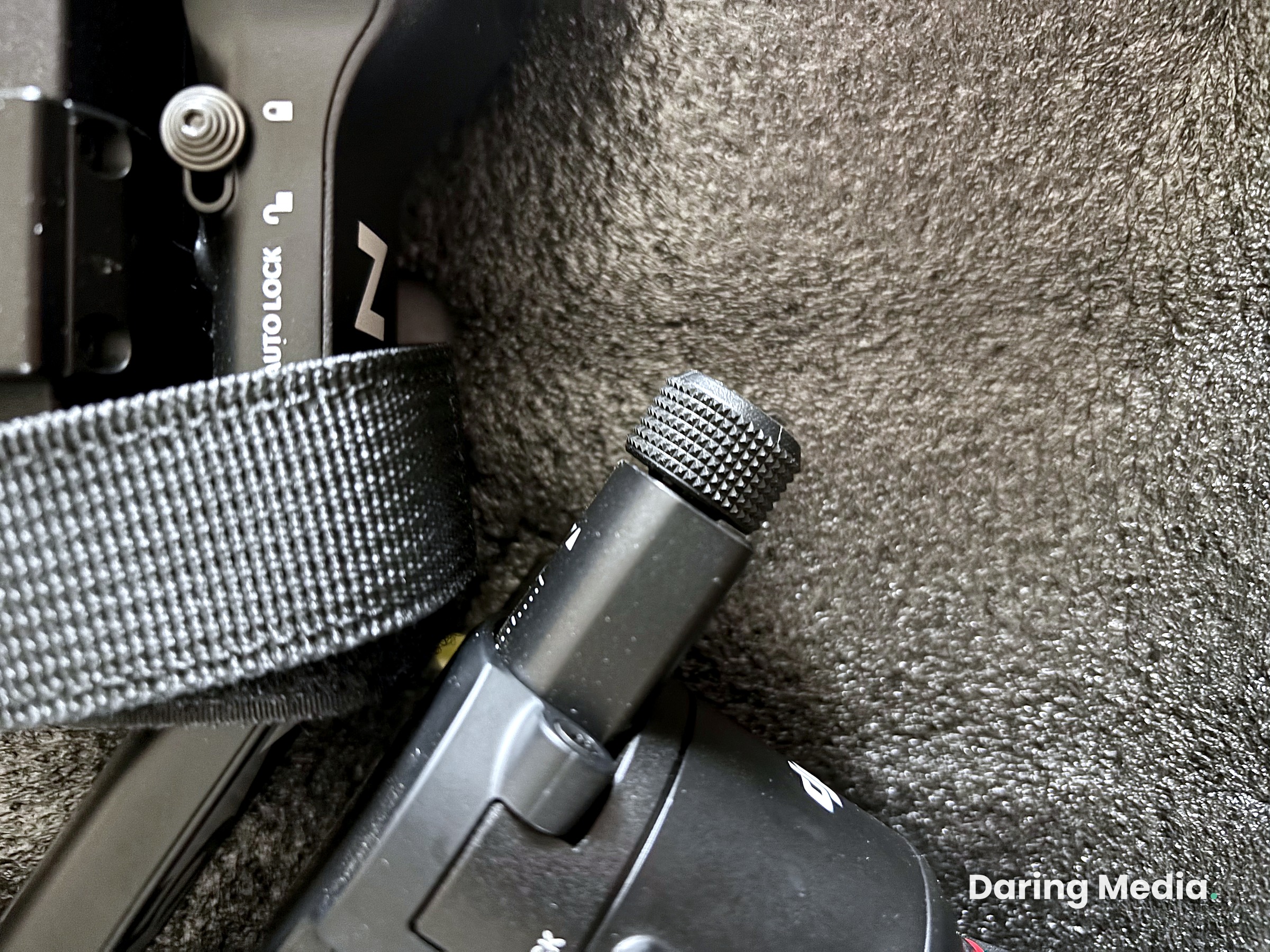
The camera plate works loose
My biggest gripe. With the small black plastic plates from the kit fitted, I could not get the screw tight enough, and the camera started shifting on the gimbal, which ruins your balance. My fix was simply to remove those plates. Since then it has held firm.
No great place for a top mic or light
If you like mounting a mic or light on top of the camera, plan your audio and lighting separately.
How it fits with the rest of my kit
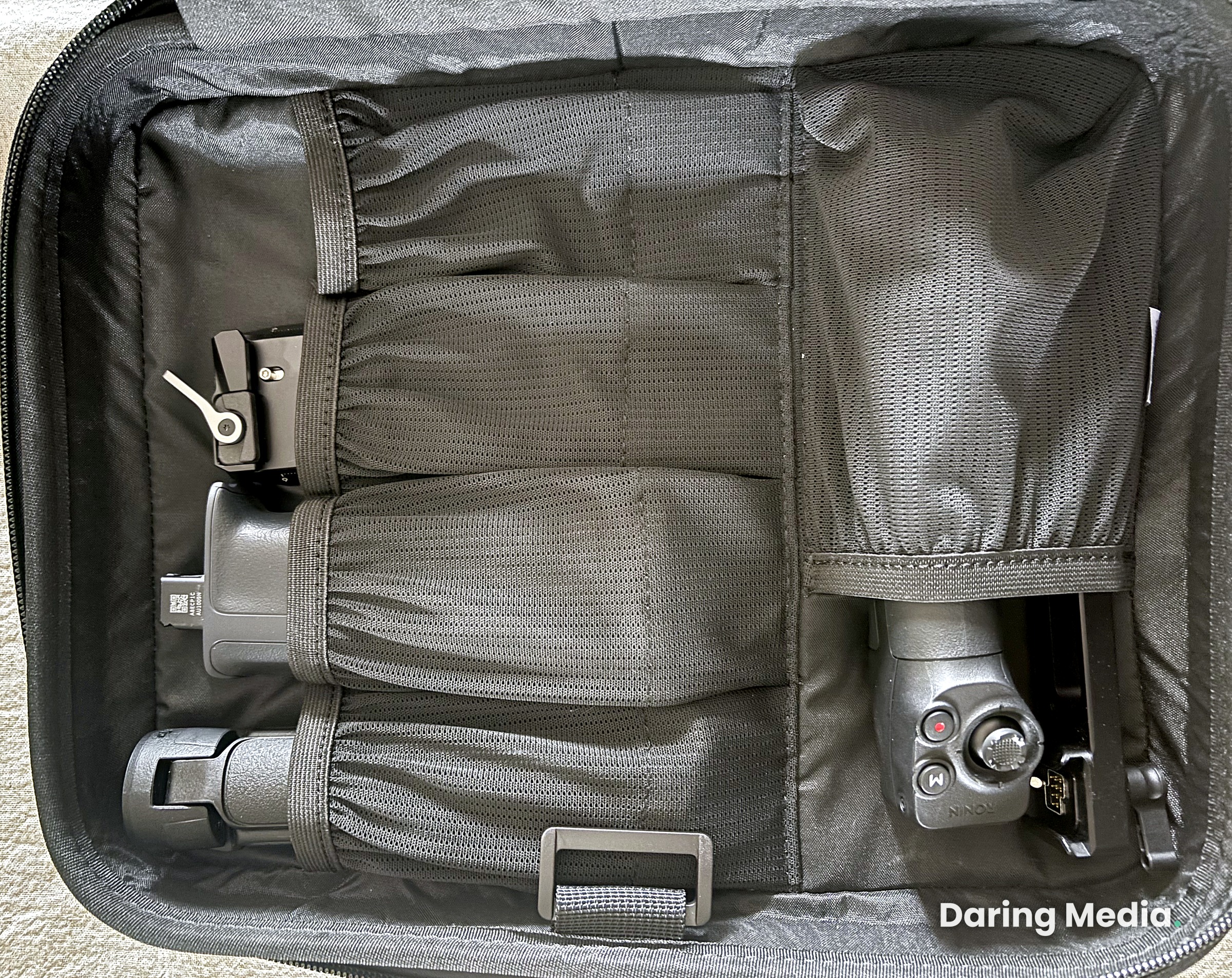
The RS 5 works alongside my DJI Pocket 3 and my DJI Mavic 4 Pro drone, and each does a different job:
- RS 5 with the A7 IV and GM II: when a client says "this shot really has to work"
- Pocket 3: awkward angles and tight spaces where the full rig is too big
- Drone: the big aerial establishing shots
Together they give me almost endless possibilities on a shoot.
Who should buy it, and who shouldn't
Buy it if you are a professional videographer who wants a more cinematic edge, that extra step up competitors might not have.
Save your money if you mainly make social media videos. A DJI Pocket 3 will do most of that job for a lot less.
My one tip
Think about your experience first. If you are not confident with tracking shots, get the Combo for the tracking module. It really is a game changer.
And when your footage looks bouncy, check your feet before you blame the gimbal. Having the handle has made me concentrate on how I move: walking smoothly, and moving from the shoulders rather than the hands. The gimbal and my technique have improved together.
The verdict
Six months in, the RS 5 Combo has earned its place in my kit bag. It survived a California desert shoot without a hiccup, it made a business-critical shot possible, and it has made me a better camera operator. Allow time to learn the settings, and lose those plastic plates if your camera starts to shift.
If you shoot on a mirrorless camera like the A7 IV and want client work that looks a cut above, it is well worth the money, and the Combo is the one to get.